Building Careers, Not Just Graduates: How FutureMap Foundation Is Closing the Gap Between Training and Employment
Through the Future Tech Fellowship, FutureMap Foundation is equipping young Africans with the skills, experience, and opportunities to build meaningful careers while strengthening Africa’s innovation ecosystem.
When Ibrahim and Nasir developed an Internet of Things (IoT)-based solution to help fish farmers monitor pond conditions and optimise feeding schedules, they were university students at Sule Lamido University in Jigawa State trying to solve a local challenge. They could not have imagined that the project would become the beginning of a journey that would lead one into Nigeria’s banking sector, the other to postgraduate study in the United Kingdom, and both into mentoring the next generation of technology professionals.
Their story reflects a challenge facing many young Africans today. Universities continue to produce talented graduates with strong academic foundations, yet many struggle to transition into meaningful employment because opportunities to gain practical experience, professional mentorship, and industry exposure remain limited.
Recognising this gap, FutureMap Foundation established the Future Tech Fellowship (FTF) to identify promising talent early and create clear pathways from learning to employment. The Fellowship combines technical education, collaborative innovation, leadership development, and industry engagement, enabling participants to develop solutions that address real challenges while preparing for careers in the digital economy.
The journeys of Ibrahim and Nasir demonstrate what becomes possible when talent is recognised, nurtured, and connected to opportunity.
Recognising Talent
FutureMap Foundation first encountered Ibrahim and Nasir during an innovation competition in Jigawa State.
Their IoT-enabled smart fish farming solution tackled a practical problem facing local farmers by monitoring water conditions and providing automated alerts for feeding and water replacement. The project combined technical creativity with a deep understanding of community needs, illustrating how emerging technologies can improve productivity within local industries.
The innovation stood out because it demonstrated curiosity, initiative, and an ability to apply technology to practical development challenges.
Recognising this potential, the Foundation invited both innovators to Abuja, integrating them into an environment where young professionals, researchers, engineers, designers, and entrepreneurs collaborated on technology-driven solutions with national relevance.
That invitation transformed a promising university project into the beginning of two remarkable careers.
Developing Talent Through Applied Innovation
In Abuja, Ibrahim and Nasir entered an ecosystem built around collaboration, continuous learning, and solution development.
They contributed to Project Tech Atlas, worked alongside multidisciplinary teams, and participated in national technology initiatives that expanded both their technical expertise and their understanding of how innovation can address development priorities.
Alongside these projects, FutureMap Foundation continued building technology solutions that responded to institutional needs. These included a digital attendance management system and two digital health solutions designed to improve operational efficiency and strengthen healthcare delivery through locally developed technology. The Foundation’s approach ensures that innovation remains grounded in solving practical challenges while creating valuable learning opportunities for emerging professionals.
This emphasis on applied innovation enables participants to build professional portfolios, strengthen teamwork and communication skills, and understand the full lifecycle of developing, testing, and deploying technology solutions.
Creating Pathways to Opportunity
The experience gained through the Fellowship opened doors that extended well beyond the programme itself.
Today, Nasir serves in the Information Technology division of one of Nigeria’s leading commercial banks, contributing to the institution’s digital infrastructure and technology operations.
Ibrahim is pursuing a fully funded Master’s degree in the United Kingdom, expanding his expertise and preparing for future leadership within Africa’s technology ecosystem.
Nasir has also secured a fully funded Master’s scholarship in the United Kingdom and is preparing to begin his postgraduate studies, marking another milestone in a journey that began with a university innovation challenge.
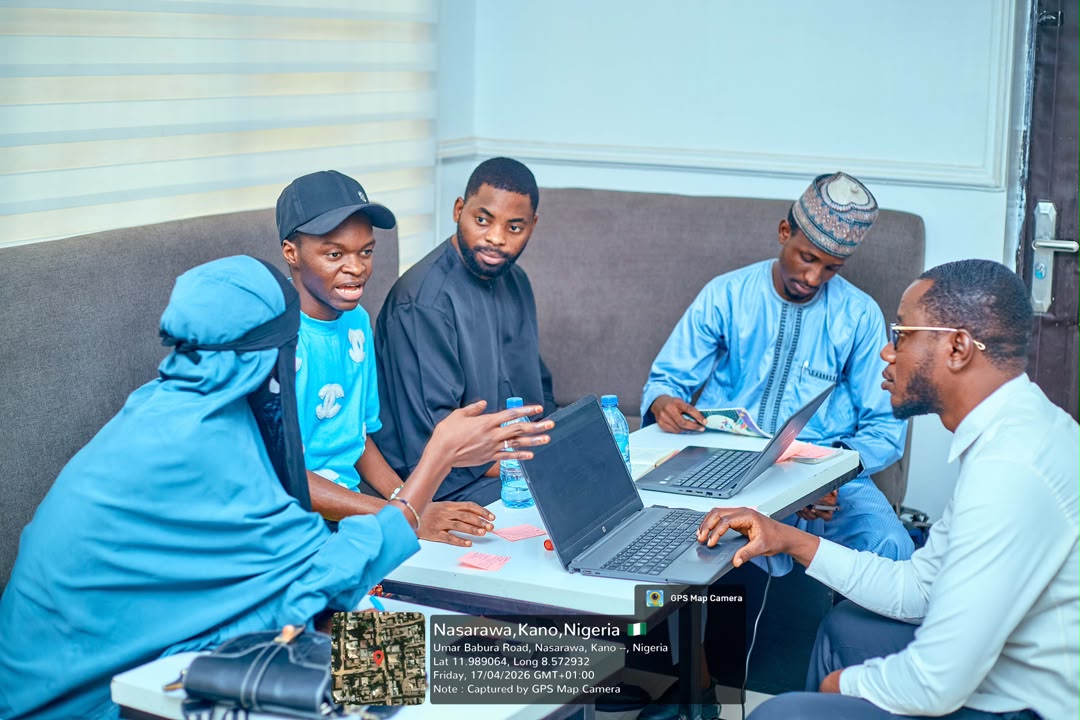
Although their careers have taken different directions, both continue to contribute to the programme that shaped their development. They now serve as Facilitators for the Future Tech Fellowship, supporting technical sessions, mentoring participants, and helping new fellows navigate the same pathway that accelerated their own professional growth.
Their journey illustrates how investment in young people creates a cycle of opportunity in which today’s fellows become tomorrow’s mentors.
A Model That Delivers Results
The experiences of Ibrahim and Nasir reflect a broader pattern emerging across the Future Tech Fellowship.
Since its inception, the programme has attracted more than 3,000 applications, selecting approximately 3% of applicants through a highly competitive process focused on identifying exceptional potential. Participants have joined from all 36 states of Nigeria, alongside fellows from Ghana and Cameroon, creating a diverse community of emerging technology professionals.
Career outcomes remain central to the Fellowship’s design. Through industry partnerships, internships, mentorship, and collaborative projects, approximately 40% of fellows have progressed into internships and employment, demonstrating the value of connecting technical education with practical experience and employer engagement.
The programme also prioritises inclusion by expanding opportunities for women, underserved communities, and people with disabilities, strengthening the diversity of Africa’s digital workforce while widening access to technology careers.
These outcomes demonstrate that career development depends on a combination of technical competence, professional confidence, mentorship, and opportunities to apply knowledge in meaningful contexts.
Innovation That Creates Public Value
Innovation within the Fellowship is guided by practical challenges identified across sectors critical to Africa’s development.
Fellows collaborate on projects spanning healthcare, agriculture, education, climate resilience, and governance, developing digital solutions that improve service delivery, strengthen institutions, and expand access to essential services.
Among these innovations is a smart hospital management system designed to reduce patient waiting times and improve hospital operations. Other teams continue developing solutions that demonstrate how technology can improve efficiency while addressing community needs.
These projects reinforce an important principle: technology creates its greatest value when it improves people’s lives and strengthens the systems they depend upon.
Building Africa’s Next Generation of Technology Leaders
Africa’s digital transformation depends on the continent’s ability to develop talented professionals who can innovate, adapt, and lead across rapidly evolving industries.
FutureMap Foundation has built a model that connects education with opportunity by identifying promising young innovators, immersing them in applied projects, strengthening their professional capabilities, and creating pathways into employment, entrepreneurship, and advanced study.
A university innovation competition introduced Ibrahim and Nasir to FutureMap Foundation. Today, one is strengthening digital systems within Nigeria’s banking sector, the other is pursuing postgraduate study in the United Kingdom, and both are mentoring future cohorts of Fellows.
Their journey demonstrates how early recognition, sustained mentorship, and opportunities to build practical solutions can shape careers with national and international impact.
That is the enduring contribution of the Future Tech Fellowship. It equips talented young Africans with the experience, networks, and confidence to build meaningful careers while strengthening Africa’s capacity for innovation, expanding opportunities for employment, and contributing to the continent’s digital future.

All Categories
Recent Posts

Global Tech Africa 2026 moves to Kano, targets 350m Sahel market